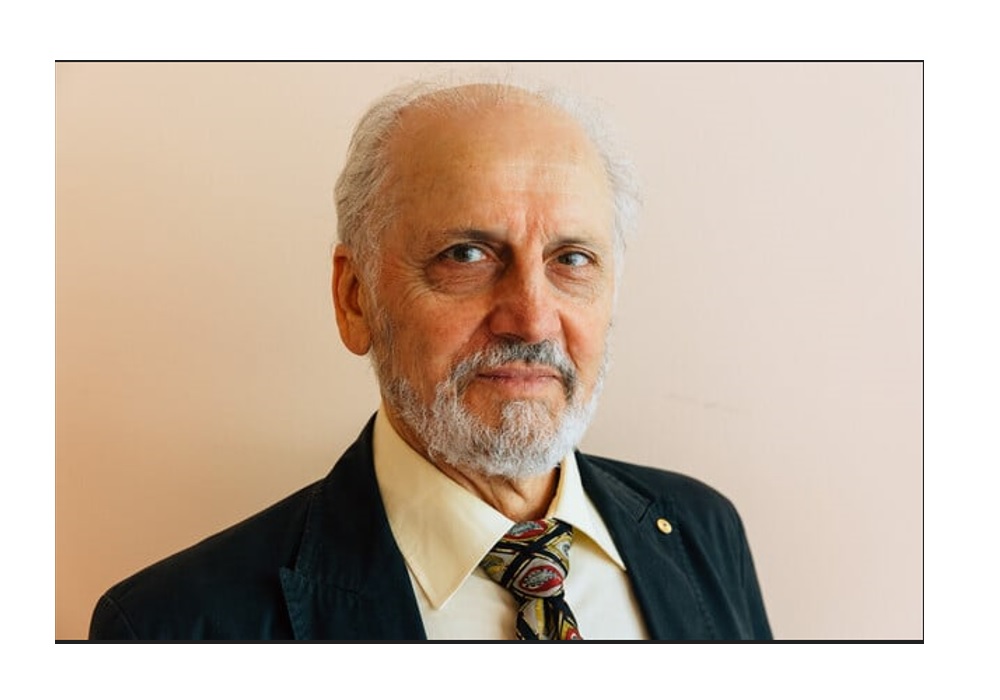
Professor Paxinos ranks among the world’s most distinguished and internationally recognised scientists in the field of Neuroscience, with an outstanding contribution to both basic and applied brain research. He is the creator of the most widely used atlases of the brain and spinal cord across a range of species, including rats, mice, birds, primates, and humans. His seminal work, The Rat Brain in Stereotaxic Coordinates (1986), has become the most highly cited book in the history of Neuroscience. Professor Paxinos has also been distinguished for his exceptional contributions to education and society, as well as for his outstanding services to the advancement of Neuroscience and to the promotion of meaningful connections between science and society.
His contribution to the establishment and development of topographical, chemical, and functional approaches to brain mapping has been fundamental. He discovered and described 94 previously unknown brain nuclei in mammals and 180 in birds, introducing innovative approaches to the conceptual mapping of the brain based on embryology, chemoarchitecture, and homologies across species. His pioneering work has significantly advanced our understanding of the organisation, structure, and evolution of the brain and has provided an essential foundation for contemporary neuroscientific research.
Professor Paxinos has received extensive international recognition for his scientific achievements. His numerous honours and distinctions include the Alexander von Humboldt Award for his contribution to Neuroscience, the Medal of the Order of Australia, the Ramaciotti Medal for Excellence in Biomedical Research, and the NSW Premier’s Prize for Excellence in Medical Biological Sciences. He has been elected a Fellow of four Australian academies and was elected a Corresponding Member of the Academy of Athens in 2012.